Living on the Gulf Coast, most know that weather can cause the power to go out more frequently than we would like. Don’t let a power outage disrupt your home or business. We install, repair, and service standby and portable generators to keep your property protected when the grid goes down. From whole-home automatic standby generators to commercial backup power systems, our team handles the full scope — including load calculations, transfer switch installation, and ongoing maintenance to ensure your generator is ready when you need it most.
Generators & Generator Services
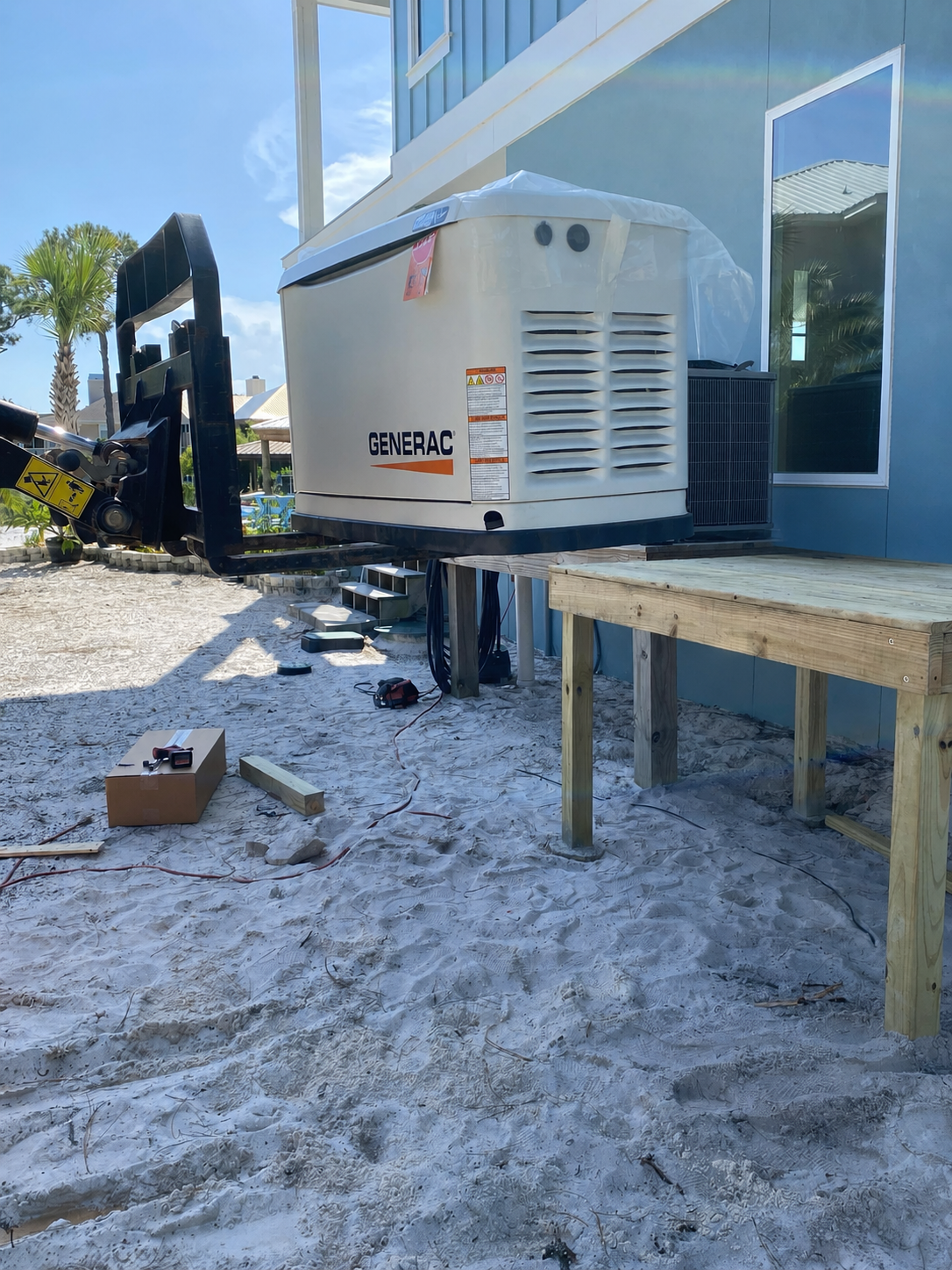
Installation & Integration
Installing a generator is a complex task that involves both electrical and, often, plumbing work:
- Whole-Home Standby Installation: Permanently mounting a standby generator (like those from Generac or Kohler) on a concrete slab or pea gravel.
- Transfer Switch Setup: Installing an Automatic Transfer Switch (ATS), which detects a power failure and seamlessly switches your home’s electrical load to the generator within seconds.
- Interlock Kits: A cost-effective alternative for portable generators that allows you to safely connect the generator to your existing electrical panel without the risk of “backfeeding” power into the grid.
- Fuel Line Coordination: Coordinate with gas professionals to connect units to natural gas or propane lines, eliminating the need for manual refueling.
Maintenance Plans
Because generators are mechanical engines, they require regular “health checks” to ensure they start when needed:
- Scheduled Tune-Ups: Annual or bi-annual visits to change the oil, replace oil and air filters, and swap out spark plugs.
- Battery Testing: Cleaning terminals and testing the battery’s charge, as a dead battery is the most common reason a generator fails to start during an emergency.
- Load Testing: Simulating a power outage to verify the generator can handle the property’s actual electrical demand.
- Remote Monitoring Setup: Configuring systems like Mobile Link so you can receive status updates and maintenance alerts on your smartphone.
Repair & Troubleshooting
Electricians also provide diagnostic services for existing units:
- Part Replacement: Repairing or replacing faulty control boards, alternators, or voltage regulators.
- Firmware Updates: Ensuring the generator’s internal software is up to date for optimal efficiency and safety.
- Fuel System Cleaning: Clearing out old fuel or debris that may be clogging the system in gasoline-powered portable units.
Free Quote
Share a little about yourself and your project and we will be happy to provide a quote for you!
"*" indicates required fields